What makes an anti raid sky settlement in Rust work and why do raiders skip it?
Want articles like this for your own video to promote it on YouTube and Google? Order them through the Telegram bot @sat_sit_bot. Articles with your video embedded are written and posted by the bot itself — on popular topical sites (no ads). Try it free: 50 articles on us.
Key takeaways
- A sky settlement in Rust is a base built high above terrain, usually stacked on a tower, so ground-level raiders must climb before they can even start blowing in.
- Raid cost scales with height: every extra wall, ladder and jump-up adds sulfur, explosives and time that most raiders will not spend on a solo target.
- The main trade-offs are stability (twig and wood frames cannot carry heavy tiers), upkeep on a tall footprint and exposure to players who build higher.
- Splitting loot between the sky core and a hidden ground stash keeps a single raid from ending the wipe.
- Willjum's anti raid sky settlement video is the reference build; the channel's Patreon page is https://www.patreon.com/Willjum.
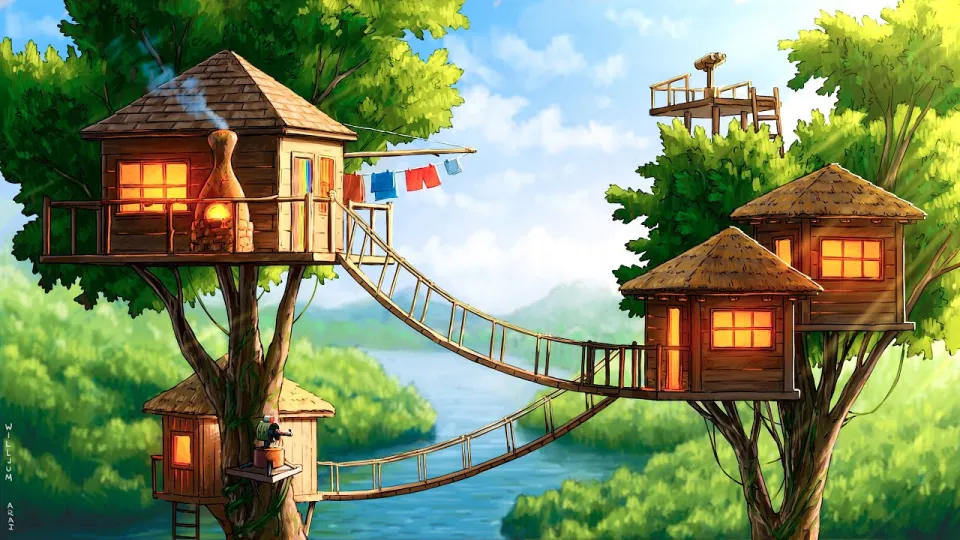
A Rust anti raid sky settlement is a base built vertically instead of horizontally: you stack a tower, put the living space and loot on top, and force every raider to climb before they can spend a single rocket. The point is not that the base is unraidable — nothing in Rust is — but that the cost of the raid in sulfur, explosives and time becomes higher than the value of what is inside. Willjum's build video walks through exactly that logic, and the channel's supporters can follow the builds and server wipes through the Willjum Patreon page.
The idea is old, but the execution matters: height, stability, upkeep and loot placement all have to line up, otherwise the sky base becomes a very expensive ladder for the raider.
Why height is the cheapest raid defence in Rust
Height is the only defence in Rust that charges the attacker before the first explosive goes off. A ground base lets a raid team park outside, place a raid base, and start blowing through doors within minutes; a sky settlement forces them to build a jump-up tower, spend wood and twig, and expose themselves on a ladder where the defender can shoot down.
Three cost layers stack on top of each other:
- Material cost — a jump-up tower of several storeys eats hundreds of wood and twig before the raiders reach the first real wall.
- Explosive cost — the first wall they meet is usually a higher tier than a ground base's outer shell, because the builder saved resources by not spreading out.
- Time and risk cost — climbing takes minutes during which the defenders, neighbours or a passing duo can counter-raid a group standing on a narrow frame in the open.
That third layer is the one that actually saves bases. Most raids on solo and duo targets are opportunistic, and an opportunistic raider picks the easiest door on the server, not the one that requires scaffolding.
How an anti raid sky settlement is built step by step
An anti raid sky settlement is assembled bottom-up, and every stage exists to make the next one harder to reach. The order below is the practical sequence used in most sky-base designs.
- Pick the footprint and the height. A small square or rectangular core (one to two foundations wide) keeps upkeep manageable while giving enough height. Building too wide is the classic mistake: the base becomes a horizontal compound on stilts and loses the cost advantage.
- Build the support column. Start with foundations, then stack frames or walls upward. Twig and wood can carry the early structure, but the load-bearing column should be upgraded to stone or metal before anything heavy goes on top.
- Add the jump-up deterrent. Leave no ladder, no stairs and no easy frame path. Raiders will build their own tower anyway, but every metre they must construct is time you can use.
- Place the core high and narrow. The loot room sits at the top, surrounded by at least one honeycomb layer. A single wall between the outside and the boxes is not a sky base, it is a piñata.
- Add a second, lower chamber. A mid-height room with tools, a sleeping bag and spare kits means a wiped top floor does not end the wipe.
- Set the tool cupboard coverage. The TC must cover the full column and the top core; if it does not, a raider can build against your own structure.
- Stock upkeep. Tall, narrow builds have a small footprint but many building pieces, and the upkeep bill is charged on all of them.
Stability, upkeep and the real weaknesses of a floating base
Stability is the hard limit on sky settlements, and it is the reason most of them are not as tall as their builders want. Building pieces lose stability with distance from a foundation, so a tower that goes too high cannot hold sheet metal or armoured walls at the top — the game simply will not let you upgrade. The practical fix is a wider base at the bottom or a support column of higher-tier material, both of which raise the cost.
Upkeep is the second tax. A tall column of stone or metal plus a honeycombed core can cost more than a compact ground base of the same value, and a solo player who logs off for two days can come back to a decayed tower. The standard answer is to keep the top tier modest, use stone for the column and save metal for the core walls only.
The third weakness is other builders. A sky settlement is only safe from below — anyone who builds a taller tower nearby, on a hill or a rock formation, gets a free firing position into the core. Before committing, check the skyline: cliffs, monument towers and neighbouring bases all matter more than the view.
How to split loot so one raid does not end the wipe
Loot splitting is what turns a sky settlement from a gamble into a strategy. Because the base is the most visible thing a player owns, it attracts attention, and the defender's job is to make sure losing it costs the raider more than it costs the owner.
- Keep the top core for the valuables you actually use: guns, explosives, components and the workbench tier you need.
- Hide a ground stash — a small box or two in a rock, a bush or a low-profile bunker — with a spare kit, tools and enough resources to rebuild the column.
- Never store all sulfur in the sky core; sulfur is the first thing a raider counts.
- Keep a sleeping bag in the mid-height chamber so a wiped top floor still leaves you inside your own footprint.
- Move high-value loot after big fights, not before; the base is most dangerous right after it has been seen.
What viewers of the build actually ask about
Viewers of Willjum's sky settlement video tend to raise the same practical doubts, and they are worth answering directly because they decide whether the build survives a wipe.
The most common one is whether a sky base is worth it for a solo player. It is, but only when the player is active: the height advantage pays off in fights and in deterrence, and it costs upkeep every day. A player who logs in twice a week is better served by a small ground bunker with a hidden stash.
The second is whether raiders simply build up and ignore the defence. Some do — a determined group with sulfur to burn will always get in. The build is designed against the majority of raids, which are cheap and fast, not against a full clan raid that has already decided to spend.
The third is about stability limits: many players try to put armoured walls at the top of a tall twig tower and find they cannot. The fix is structural, not cosmetic — widen the base or upgrade the column first.
Useful links
- Willjum on Patreon — support the builds and videos
- Willjum on Twitch — live survival streams
- Willjum on Twitter — updates and clips
- Creative Commons Attribution 4.0 licence used for the video music
The verdict on building high in Rust
An anti raid sky settlement works because it attacks the economics of raiding rather than the raider: height, tier and time all add cost before the first wall falls, and most raids in Rust are decided by cost. It is not a permanent answer to a determined clan, so the build only pays off when the owner splits loot, keeps upkeep funded and checks the skyline for taller neighbours. Willjum's video is a useful reference for the layout and the reasoning behind it, and the channel's Patreon page is where the builds and wipes are supported. Treat the sky base as a cost multiplier and a stash as insurance, and the wipe survives even a bad night.
Source: I Built an anti raid sky settlement in Rust... · Markdown version
Questions & answers
Is a sky settlement in Rust actually safe from raids?
No base in Rust is unraidable, and a sky settlement is not an exception. Its value is economic: it forces raiders to build a jump-up tower, climb in the open and spend explosives on higher-tier walls, which filters out the cheap opportunistic raids that make up most attacks. Against a clan that has already committed sulfur, the height only buys time.
Do I need a lot of upkeep for a tall sky base?
Upkeep is charged on every building piece, and a tall column plus a honeycombed core can cost more than a compact ground base of similar value. Keep the footprint small, use stone for the column and save metal for the core walls, and log in regularly — a tower that decays while you are offline is the most common way these builds die.
Can I build a sky base as a solo player without a clan?
Yes, and solo players are the usual audience for the design because it protects a small amount of loot well. The condition is activity: you need to farm upkeep and be online enough to use the height advantage in fights. A player who logs in rarely is better off with a hidden ground stash and a low-profile bunker.
Why can't I upgrade the top of my tower to metal or armoured?
Stability limits how far from a foundation you can place higher-tier pieces. If the top of the column is too far from the base, the game will not let you upgrade those walls, which is why sky bases widen at the bottom or use a stronger support column. Fix the structure first, then upgrade the core.